
Since 2019
About
A festival for orchestral music that does not exist yet, held in the halls it is written for.
New orchestral work gets commissioned in about forty rooms worldwide. For six days a year we would like most of them to be in Prague.
The summit began in 2019 as three days in one hall, forty people and two commissions paid for out of a grant that had been meant for something else. It has kept the same shape since: composers write for a specific room, the room is booked before a note exists, and the players are told who wrote it only once they have read it.
Nothing here is premiered twice. A piece is played, discussed the following morning with the composer sitting in the hall, and then belongs to whoever wants to programme it next. We keep no exclusivity and ask for none.
The festival is run by six people all year and about ninety in April. It is funded by public money, foundations and a small number of companies, and its accounts are published each March.
Wed 15 April · Rudolfinum
Opening night
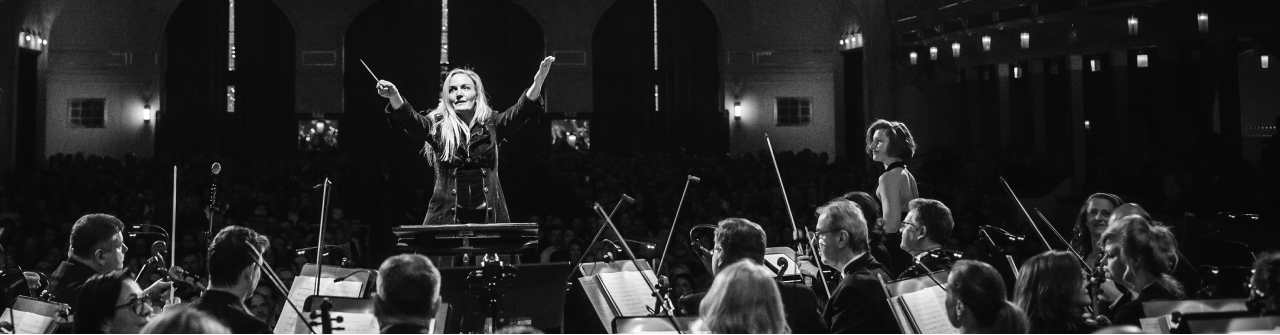
Eight composers open the week with a single continuous set, no interval and no applause between pieces. The running order is fixed the morning of the concert and printed on the door.
Thu 16 – Fri 17 April
Orchestral series
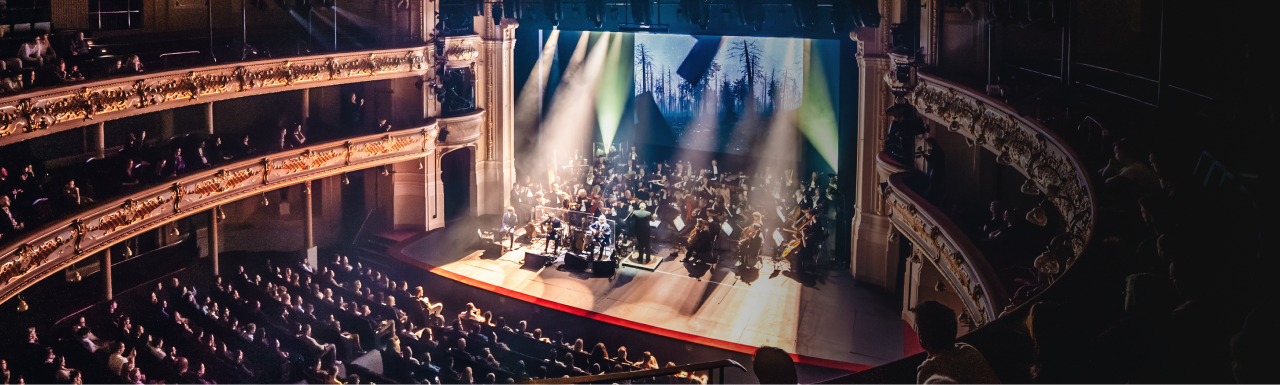
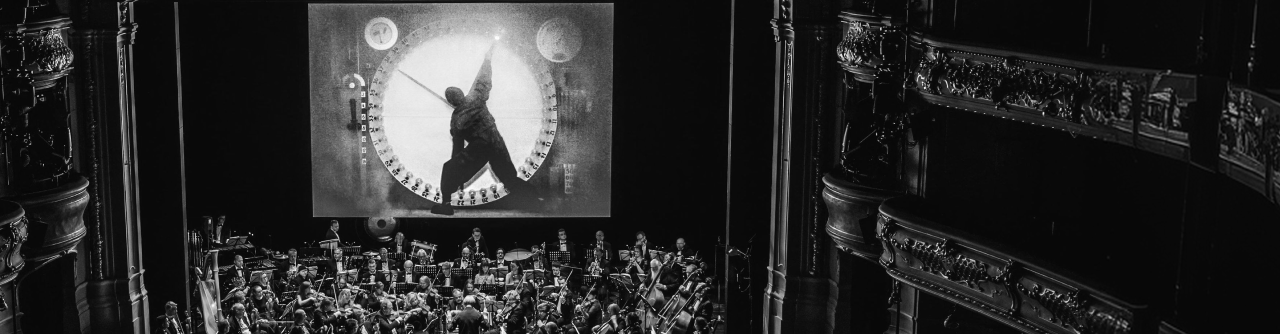
Three evening concerts with the Prague Philharmonia, each built around one premiere and two works that made it possible. Scores are on public display in the foyer from noon.
Nightly from 22:00
Late sessions
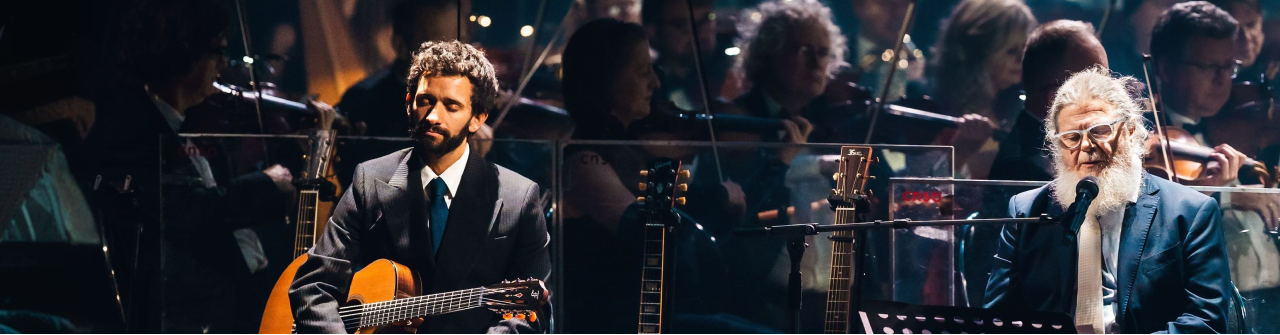
The room is cleared, the chairs come out, and whoever is still in the building plays. Free to pass holders, standing only, announced on the day.
Across the week
Premieres
Nine commissions, all written in the last eighteen months, all played here first. Every composer sits in the hall for their own premiere and takes questions the following morning.
Updated as things are confirmed
Festival news
What has been announced so far, newest first. Everything here is also on the programme pages once it is fixed.
15 March 2027
Industry accreditation opens
Industry accreditation opens today, capped at three hundred delegates.
Mornings are structured: eleven sessions across four days on commissioning, rights, touring and funding. Nothing is recorded and nothing is streamed, which is the only reason anyone says anything useful in them.
Afternoons hold no programming at all. Delegates get the concert schedule, a room with coffee, and each other.
20 February 2027
First eight names
Eight names for the opening night: Ravn, Serizawa, Ferreira, Bekele, Vlasák, Nowak, Whelan and Quintana.
They play as one continuous set with no interval and no applause between pieces. The running order is fixed the morning of the concert and printed on the door — not before.
Four of the eight have never had a piece played in Prague.
3 February 2027
The Rudolfinum, amplified
The Rudolfinum has never been amplified for a classical programme. It was not built for it and, for most of its life, nobody wanted it to be.
What goes in this year is forty-one speakers placed to cancel the room's own reflections rather than add to them. Matthias Böhler has been tuning it since January, mostly at night, mostly by ear.
The intention is that you never notice it. If the amplification is audible as amplification, it has failed.
Thu 16 – Sun 19 April · Municipal House
Industry days
The half of the summit the audience never sees: commissioners, publishers, festival programmers and ensembles, in one building, for four days.
New orchestral work gets commissioned in about forty rooms worldwide. For four days a year we would like most of them to be in Prague.
Industry days run alongside the public programme, in the same building as the morning talks. Delegates see every concert, and every composer is in the room afterwards — that is the entire proposition, and we keep the delegate count low so it stays true.
There is no trade floor and no booths. Mornings are open sessions on commissioning, rights and touring; afternoons are unscheduled on purpose, because the useful conversations have never once happened on a timetable we set.
Talks daily, 11:00 · Municipal House
Guests
Forty composers, conductors and makers are here for the whole week. Each takes questions the morning after their work is played. Open a portrait for the full biography.
Composer · Denmark
Alma Ravn
Writes for orchestras the way other people write for rooms — she asks how far apart the players can sit before an ensemble stops being one. Her 2025 piece for divided strings was performed with the two halves in separate buildings.
Opening nightWed 15 April · Rudolfinum
On distance and ensembleThu 16 April, 11:00
Commissioning without a budgetSat 18 April, 09:30
Composer · Czech Republic
Teodor Vlasák
Spent six years transcribing the sound of Prague's tram network before writing a note of his own. The resulting cycle uses the exact pitches of eleven junctions, and he still refuses to say which ones.
Orchestral seriesThu 16 – Fri 17 April
Field recording as scoreFri 17 April, 11:00
Conductor · United Kingdom
Ines Okonkwo
Conducts almost entirely from memory and rehearses without a podium. She has premiered nineteen works in the last four years and has a standing rule that composers sit in the hall rather than backstage.
PremieresAcross the week
Rehearsing from the stallsFri 17 April, 09:30
Composer · Japan
Hiroko Serizawa
Her scores specify silence in seconds rather than rests, which players describe as either liberating or unbearable. She has written that a hall's empty sound is the only instrument she trusts completely.
Opening nightWed 15 April · Rudolfinum
Notating silenceSat 18 April, 11:00
Sound designer · Germany
Matthias Böhler
Builds the amplification for halls that were never meant to be amplified. Worked on the Rudolfinum installation for this festival, which uses forty-one speakers and is meant to be inaudible as a system.
Composer · Brazil
Carla Ferreira dos Santos
Writes fast, loud, and for far too many percussionists. Her commission for the opening night calls for nine players and a hall that can take it, which is why it is being performed in Karlín rather than upstream.
Opening nightWed 15 April · Rudolfinum
Writing for too manySun 19 April, 11:00
Instrument maker · Türkiye
Yusuf Demirtaş
Makes microtonal instruments to order and then teaches orchestras to play alongside them. Four of the premieres this week use instruments that did not exist eighteen months ago.
Late sessionsNightly from 22:00
Composer · Iceland
Sigrún Halldórsdóttir
Works almost exclusively with amateur choirs, on the grounds that professionals have already decided what a voice should sound like. Her closing commission is for the festival chorus and 300 members of the public.
PremieresAcross the week
The unrehearsed voiceMon 20 April, 11:00
Composer · Norway
Britta Solheim
Britta writes for players who will never meet before the downbeat. Their last commission ran forty minutes without a written pulse.
On distance and ensembleThu 16 April, 11:00
Composer · Poland
Emil Nowak
Emil builds pieces around a single sustained note. The premiere was played twice in one evening, at the audience's request.
Opening nightWed 15 April · Rudolfinum
Conductor · Italy
Rosa Marchetti
Rosa scores for rooms rather than for ensembles. They have turned down more commissions than they have accepted, on principle.
Orchestral seriesThu 16 – Fri 17 April
Composer · Ghana
Kwame Adjei
Kwame works only with instruments older than the performers. Two of their pieces exist only as parts; the full score was never assembled.
Opening nightWed 15 April · Rudolfinum
Composer · France
Léa Fontaine
Léa treats the conductor as optional and says so in the front matter. The work was written in eleven days and rehearsed for six weeks.
Orchestral seriesThu 16 – Fri 17 April
Notating what cannot be playedFri 17 April, 11:00
Conductor · Estonia
Dmitri Ivanov-Krause
Dmitri composes in the hall, at night, with the lights off. They have conducted the same piece in nine countries and changed it in each.
Instrument maker · Japan
Mei Tanaka
Mei writes parts that are easier to play than to read. Their instruments are built to order and never twice the same way.
Composer · Colombia
Andrés Quintana
Andrés starts every piece from a recording of somewhere. The score carries a footnote longer than the piece.
Opening nightWed 15 April · Rudolfinum
Composer · Sweden
Freya Lindqvist
Freya refuses to fix a tempo before the dress rehearsal. It has been recorded once, badly, and they prefer it that way.
Orchestral seriesThu 16 – Fri 17 April
Rooms as instrumentsSat 18 April, 11:00
Composer · Ethiopia
Rahel Bekele
Rahel writes for amateur players and professional listeners. They rehearse standing in the audience rather than at the front.
Opening nightWed 15 April · Rudolfinum
Sound designer · Czech Republic
Otto Marek
Otto builds long pieces out of very short ones. The commission was funded entirely by the players who premiered it.
Conductor · Netherlands
Sanne de Vries
Sanne notates dynamics as distances rather than volumes. Three of the parts are optional and nobody agrees which.
Composer · Greece
Ilias Papadakis
Ilias has not used a bar line since 2022. Their last commission ran forty minutes without a written pulse.
Commissioning without a budgetSun 19 April, 11:00
Composer · Ireland
Nora Whelan
Nora writes for the seats as much as for the stage. The premiere was played twice in one evening, at the audience's request.
Opening nightWed 15 April · Rudolfinum
Composer · Romania
Bogdan Iliescu
Bogdan composes exclusively at the piano and never plays it. They have turned down more commissions than they have accepted, on principle.
Conductor · Sierra Leone
Amara Sesay
Amara makes scores that fit on one page. Two of their pieces exist only as parts; the full score was never assembled.
Late sessionsNightly from 22:00
Composer · Czech Republic
Klara Novotná
Klara writes for players who will never meet before the downbeat. The work was written in eleven days and rehearsed for six weeks.
Late sessionsNightly from 22:00
The score after the premiereMon 20 April, 11:00
Composer · Germany
Tobias Reinhardt
Tobias builds pieces around a single sustained note. They have conducted the same piece in nine countries and changed it in each.
Orchestral seriesThu 16 – Fri 17 April
Instrument maker · Spain
Paloma Ruiz
Paloma scores for rooms rather than for ensembles. Their instruments are built to order and never twice the same way.
Composer · Finland
Jussi Rantanen
Jussi works only with instruments older than the performers. The score carries a footnote longer than the piece.
Conductor · Hungary
Zsófia Barta
Zsófia treats the conductor as optional and says so in the front matter. It has been recorded once, badly, and they prefer it that way.
Writing for strangersThu 16 April, 11:00
Composer · Poland
Marek Zieliński
Marek composes in the hall, at night, with the lights off. They rehearse standing in the audience rather than at the front.
Sound designer · Iceland
Halldór Jónsson
Halldór starts every piece from a recording of somewhere. Three of the parts are optional and nobody agrees which.
Composer · Serbia
Vera Stankovic
Vera writes for amateur players and professional listeners. The premiere was played twice in one evening, at the audience's request.
Conductor · Denmark
Tomás Bergström
Tomás builds long pieces out of very short ones. They have turned down more commissions than they have accepted, on principle.
Composer · India
Meera Raghavan
Meera notates dynamics as distances rather than volumes. Two of their pieces exist only as parts; the full score was never assembled.
Late sessionsNightly from 22:00
Composer · Austria
Lukas Bauer
Lukas has not used a bar line since 2022. The work was written in eleven days and rehearsed for six weeks.
What an orchestra forgetsSat 18 April, 11:00
Instrument maker · Finland
Signe Aalto
Signe writes for the seats as much as for the stage. They have conducted the same piece in nine countries and changed it in each.
Three halls, one twenty-minute walk
The venues
Everything happens inside a twenty-minute walk. The walk between the halls is part of the week, which is why we have never run a shuttle.
2027 edition
Partners
The festival is funded by a mix of public money, foundations and companies who have mostly been with us since the first edition.
Principal partners
- Ministry of Culture
- City of Prague
- Czech Music Fund
Major partners
- Bohemia Energy
- Sázava Foundation
- Nová Banka
- Vltava Print
- Karlín Development
Media partners
- Czech Radio Vltava
- Harmonie
- A2
- Radio Classic
- Opera Plus
- Full Moon
Supported by
- Goethe-Institut
- Institut français
- Nordic House
- Adam Mickiewicz Institute
- Pro Helvetia
- British Council
- Italian Cultural Institute
- Instituto Cervantes
Year-round and seasonal crew
The team
Six people work on the festival all year. Another ninety arrive in April and make it actually happen.
Core team